

Travel is the key that opens the doors to new worlds for you.
While traveling, you not only learn, but you also feel the desire to talk and write about what you’ve learned, to share this knowledge and beauty with others.
One of the best things travel can offer is learning something — a piece of information, a rule, or a belief that local people follow — from any country, city, or village in the world. Sometimes you need to learn what a traffic light means, sometimes what a different sound signal means for you, and sometimes you need to understand the local language, beliefs, and culture.
Knowing how much time you need to reach the departure gate
Before flying anywhere, if you have been to that country before, you likely know how many minutes it takes to reach the departure gate. Knowing the time needed to walk around the terminals is one of the most important ways to save time. As a result, moving according to your schedule helps you avoid unnecessary stress.
Understanding the sounds on the airplane
Only a true traveler knows what the signal sounds on a plane mean without being part of the cabin crew or having flight training. Anyone who has flown at least once knows from pre-flight information cards or the cabin crew’s instructions what to do before and after the flight, and what to take in any situation. However, understanding the signals on the plane is not always easy. Generally, sound signals (beeps or dings) are a communication system among the crew and can mean different things depending on the airline.
Some planes make a sound after landing to indicate that the landing gear has been retracted. Another sound indicates whether the seatbelt sign is on or off. Three short chimes (an urgent message) are sounds nobody wants to hear — especially if you are planning to drink. A true traveler knows exactly what all these sounds mean.
Greeting in multiple languages
Travelers inevitably learn the greeting rituals of the country they are visiting. If you are a traveler, you will probably look up a few words before your trip. Even if you don’t, when you visit a café, museum, or any public place, you will encounter these words, and they will stick in your memory, becoming familiar over time. Examples include words for “hello” such as salam, aloha, ciao, hola, etc.
Knowing the time difference
You can be sure that an experienced traveler can instantly know the time in another part of the world without doing detailed calculations. To gain this knowledge, you just need to be a genuinely good traveler.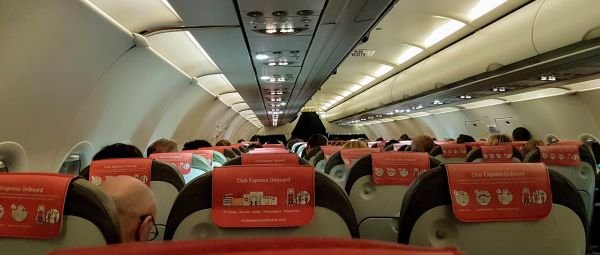
Identifying the type of airplane by its shape
One of the fun aspects of travel is knowing the type of plane you will fly on. When you see your plane before it takes off, you’ll be able to tell whether it’s a Boeing or an Airbus. Of course, to do this, you need to have flown a lot and traveled extensively.
Knowing tipping customs
In some countries, tipping is mandatory, while in others it is optional. For example, in the USA, leaving a tip at a restaurant may be required, whereas in Italy, it is considered part of etiquette. A true traveler knows where and when to tip.
Knowing where to get free tapas
First, it’s important to note that tapas are very popular in Spain and are not considered a main dish. If you enjoy alcoholic drinks, tapas are the snacks served alongside them, such as various cheeses, seafood mixes, fried bites, and more.
If you want to spend little money while dining out, Granada is the perfect city to visit. It is one of the places in Spain that still preserves the tradition of free tapas.
Currency Conversion
Another advantage of traveling is that you can easily calculate currencies. Even if the rates change daily, if you are in Sweden, you will immediately have a sense of the average value of 1 Swedish krona.
Knowing a lot about world geography
Did you know that approximately 60% of the world’s lakes are in Canada? If you are a true traveler, of course you did. Or did you know that about 90% of Libya is desert? What about the fact that Norway has a village named “Å” (pronounced like “aw”)? A real traveler won’t be surprised by any of this.